
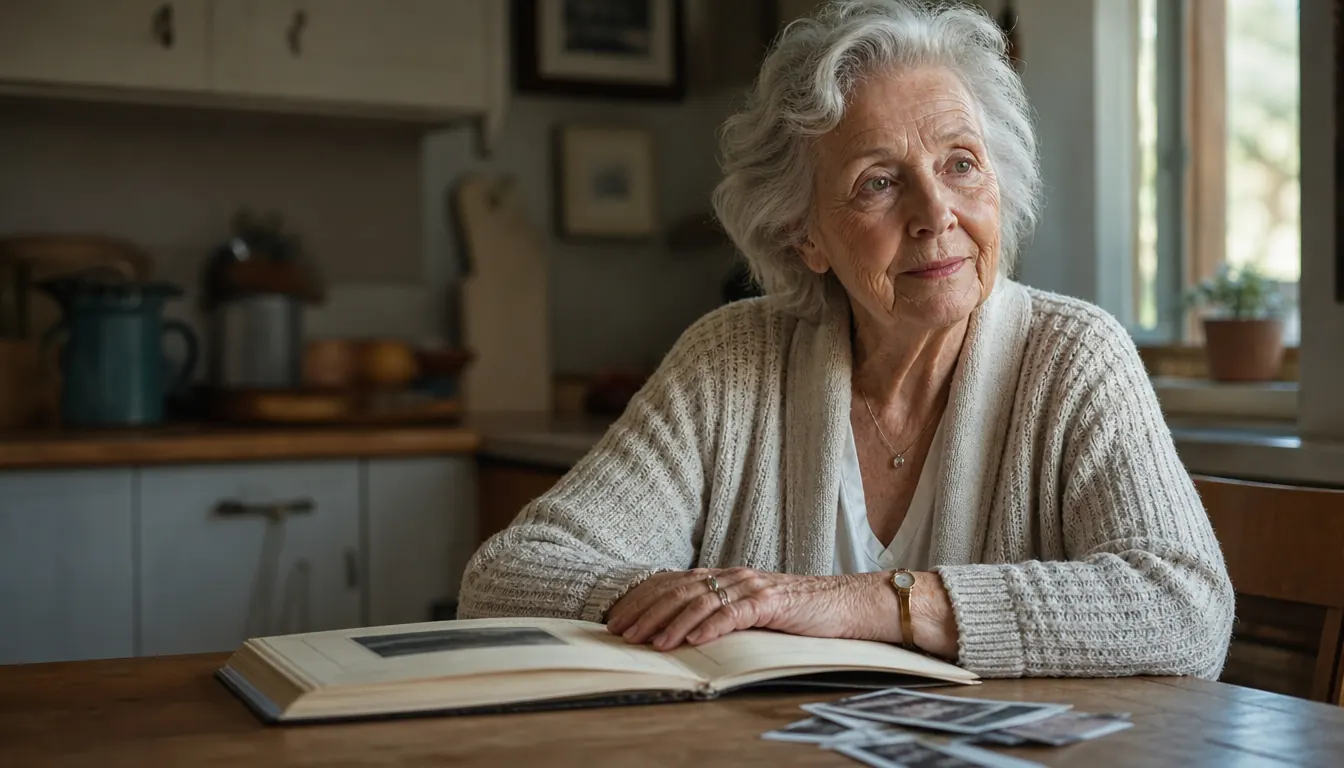
I am Marla Ostrander, 63, a retired school librarian in Lancaster, Pennsylvania. My kids gave me Tell Me Your Life Story, Grandma last year. I set it on the side table and left it there for three weeks. My life did not feel like a book. It felt like lesson plans, casseroles, and a husband named Ron who cannot find the garden twine. Then my 14-year-old grandchild asked me what I was like at 14, and I gave a three-sentence answer that even I found boring.
That is the problem the journal solves, but only if you use it like a conversation instead of a school assignment. The book is 122 pages, 7 by 10 inches, and 9.1 ounces, so it is easy to hold and easy to leave out. It gives you questions. You bring the answers. Here is how I got more from it, and how you can too, whether you are the grandmother writing it or the person who bought it.
One question is easier than a whole lifetime
Start with the prompt that makes you smile, wince, or smell your mother's kitchen. The blank page stops being scary once it asks you something specific.
Amazon Check Today's Price on Amazon →Step 1: Start with the question that gets a reaction, not the one that sounds important
Pick the question that makes you laugh or wince, not the one that sounds like a job interview. My first entry was not about my core values. It was about my first job. I wrote about shelving books at the school library and the cart with the wobbly wheel. That one memory opened the door to three more, including the smell of the pencil sharpener and the teacher who always lost her coffee mug.
You can start in the middle of your life. Grandkids do not care about chronology. They care about the details that make you a person instead of a grandmother-shaped object. Write about the summer you worked at a snack stand, the car you learned to drive in, or the first meal you cooked for Ron. The book has room for all of it. It does not need to begin with your birth.
What I tried first did not work. I sat down with the book on a Sunday afternoon and decided to answer ten questions in a row, the way I used to grade a stack of papers. Forty minutes later I had nine blank pages and a headache, because none of the prompts on my list were the one I actually wanted to answer. When I came back the next morning and answered only the question about my first job, I filled two pages without stopping. One question, not ten. That was the whole correction.
If you get stuck, read the question out loud to someone. I read one to my mother, June, who is 88 and lives twenty minutes away. She answered it about her own mother, and I wrote that down too. The journal is yours, but it does not have to be a solo project. One question can turn into a kitchen table conversation, and that conversation can turn into a page.
Step 2: Write in short sittings and leave the book visible
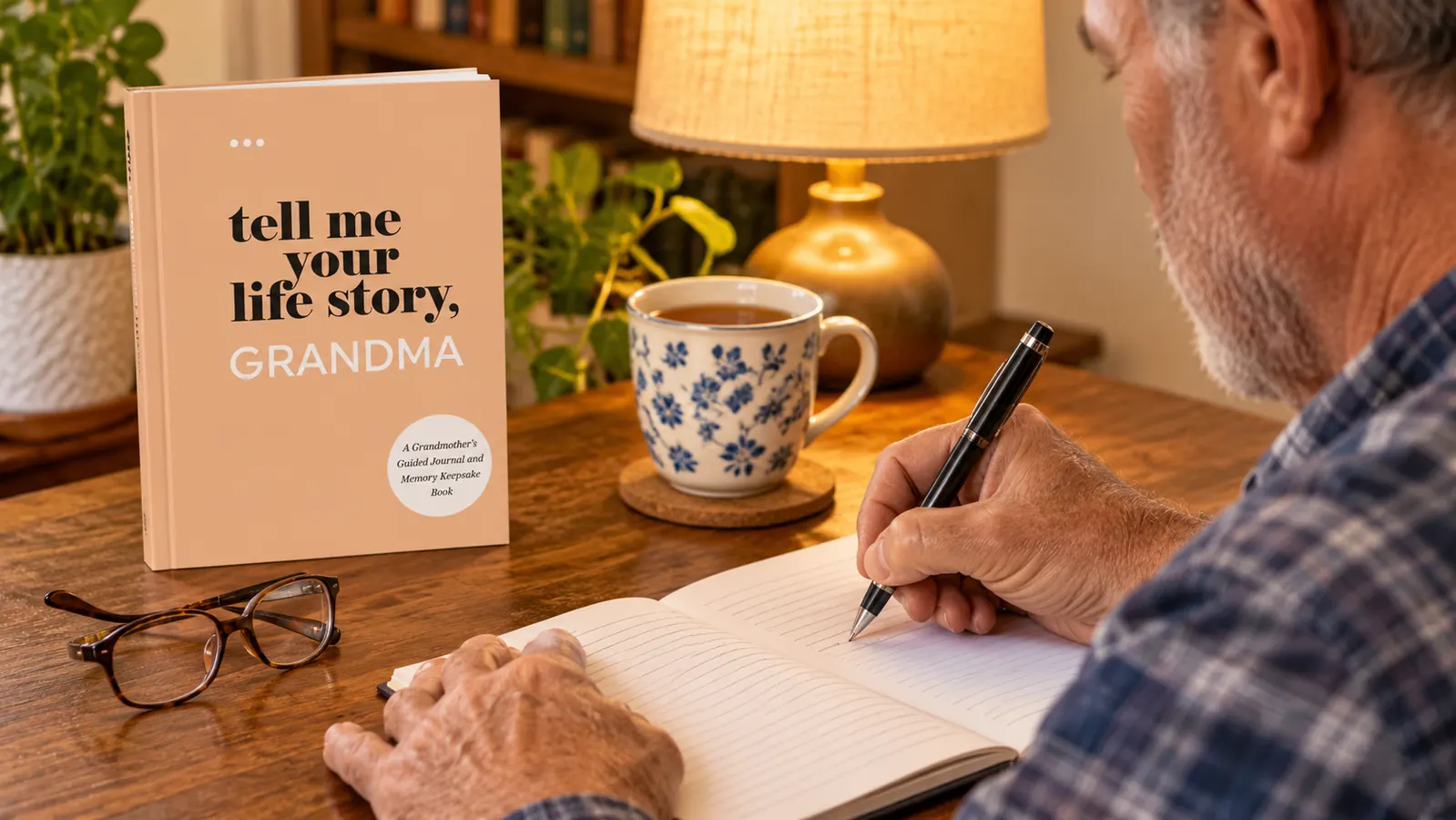
Write for ten or fifteen minutes, not an entire afternoon. I keep the book on the kitchen counter with a pen beside it, and I write while the coffee is still hot. The Tell Me Your Life Story, Grandma journal is light enough to hold in one hand, which matters if your hands ache. June has mild arthritis, and she can hold it without bracing it on a table. That small detail is the difference between a book that gets used and a book that gets moved from the counter to the drawer.
Tuesday mornings turned out to be the ones that stuck. Ron goes out to the garden around seven, and I sit at the counter with the book and a second cup of coffee. Last Tuesday I wrote for eleven minutes by the clock on the stove and got down four paragraphs about the apartment on Orange Street where we lived in 1984, including the radiator that knocked all night and the neighbor who kept a spare key under a flowerpot. Eleven minutes. I did not plan it and I did not schedule it.
Do not try to fill 122 pages in a weekend. That is how you end up writing see above and quitting. One answer a day is plenty. Some days I write two sentences. Some days I write a page and a half about a dog we had when I was nine. The book does not care. It is not keeping score, and the grandkids are not checking your word count.
Leave the book open when you stop. A closed book on a shelf is a project. An open book on the counter is an invitation. My grandkids started flipping through it because it was already out. The 4-year-old asked why I wrote so small. That became a conversation about penmanship, which is not in the book, but it counts. The point is to make the journal part of the room, not part of a to-do list.
Step 3: Add a photo or an object to each entry
Add a photo, a recipe card, or an object to the entry. The journal asks the question, and the photo answers the part you cannot say. I set a picture of my grandparents' porch beside me while I wrote about Sunday dinners. The writing got specific: the screen door, the metal chairs, the way my grandmother cut pie. Without the photo I would have written that dinner was nice and moved on.
The recipe card was the one that surprised me. I found my mother's index card for applesauce cake, the one with the corner burned and the butter amount written in pencil because she changed it every year. I set it beside the book and wrote about the mixing bowl she used, which was chipped on one side and heavier than it looked, and about the way she let me stir even though I always spilled. I would never have remembered that bowl on my own. The card did it.
You do not have to glue anything into the book. I tuck a photo between the pages until I am done, then I put it back in the album. The point is to look at something while you write. June loves photos of the family, and when I bring her a stack, she remembers names and dates she would not recall on her own. A picture gives her a place to start.
If you are the one giving the book, add a note on the first page. Not a long speech. Something like I want to know what you were like at 15. That gives the grandmother a target. It also signals that the book is not a test. It is a request. That note is the difference between a gift that gets opened and a gift that gets used.
Step 4: Let someone else ask the questions
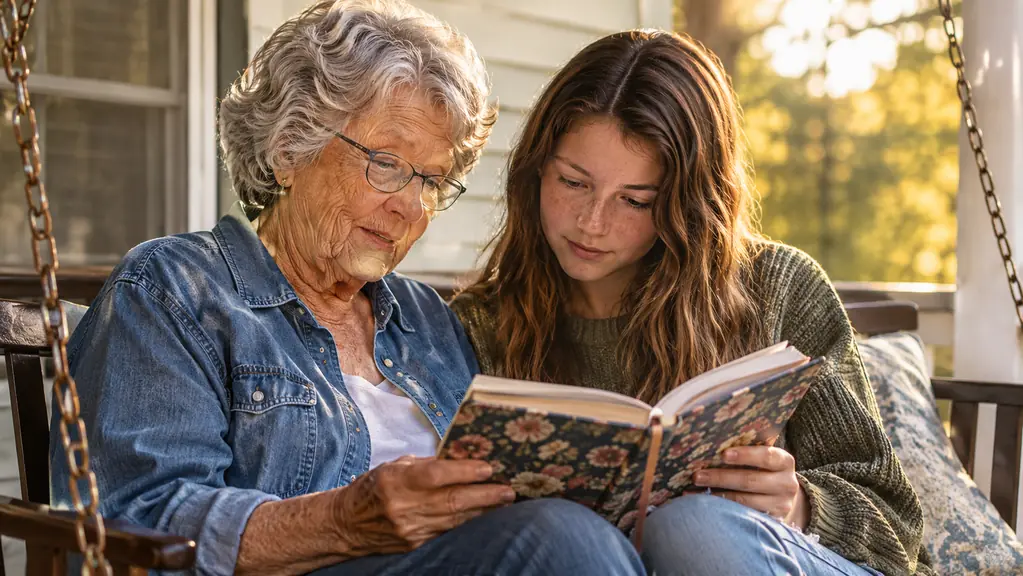
Let someone else ask the questions. I handed the book to my 14-year-old grandchild and asked them to pick a prompt. They chose the one about music. I wrote about the Beatles record I played until it skipped. They had never heard of a record skipping, so we talked about that for ten minutes. That conversation is now part of the entry, even though it happened after I wrote it.
The phone calls with June take about twenty minutes. She lives twenty minutes away, but some weeks I do not make it over, so I call her on Sunday evening and read her one prompt from the book. Last week it was the one about school. She described the cloakroom at her elementary school and the smell of wet wool in winter, and I wrote it down on the back of an envelope and copied it in later. She asked me to read it back to her twice.
The 4-year-old cannot read the prompts, but they can ask what was your favorite toy. I answered that one out loud, and my older grandchild wrote it down for me. The handwriting is messy. That is fine. The book is a record, not a calligraphy sample. When the little one sees their own words in the book next to mine, the journal becomes theirs too.
If your grandmother lives far away, call her and read a prompt. Write down what she says, then send her the page or read it back. The journal works in person or on the phone. It is a set of questions, not a locked diary. You can fill it in together across a hundred small calls, and the book will hold all of them.
Step 5: Read it back after a week and fill the gaps
Read it back after a week and fill the gaps. I wrote we went to the shore and left it there. A week later I added the name of the town, the smell of the boardwalk, and the fact that Ron got sunburned on the first day. The second pass is where the good details show up. The first pass gets the memory down. The second pass makes it something the grandkids can see.
Do not force an answer to every question. Some prompts did not fit my life. I skipped the ones about military service and wrote not for me in the corner. The book has 122 pages, not 122 obligations. A skipped question is not a failure. It is an honest answer about what belongs in your story and what does not.
When you finish a section, read two or three entries to the grandkids. Not the whole book. Just enough to show them it is worth opening. My 14-year-old now asks to read the next one. That is the whole point. The book is a bridge, and you have to walk across it. You do not need to finish the bridge before you let someone stand on it.
What Else Helps
Keep the book where you sit, not where you store things. On the end table, on the kitchen counter, in the bag you take to June's apartment. The Tell Me Your Life Story, Grandma book works best when it is visible. I also keep a small box of photos nearby, because one picture can unlock a page. If the book is in a drawer, the photos stay in the album and the pages stay blank.
Pair it with a family dinner or a phone call. Ask one question at the table and let everyone answer. Write down the best answer later. The book does not have to be filled in silence. Some of my best entries came from a conversation I had while doing dishes. The journal gave me a place to put the story, but the story started in the room.
If you are buying this for a grandmother, give it with a pen and a note. Not a fancy pen. A pen that works. The book is 9.1 ounces and 7 by 10 inches, so it fits in a tote bag. It is not a coffee table decoration. It is meant to be written in. If she is not a writer, say that is fine. The book asks questions. She only has to answer one.
The journal did not ask me to be a writer. It asked me what I remembered, one question at a time.
The stories are already in her. The book just asks.
If you are the grandmother, start with one prompt today. If you are the one giving it, add a note and leave the book open. The first answer is the hardest, and it is worth it.
Amazon Check Today's Price on Amazon →