
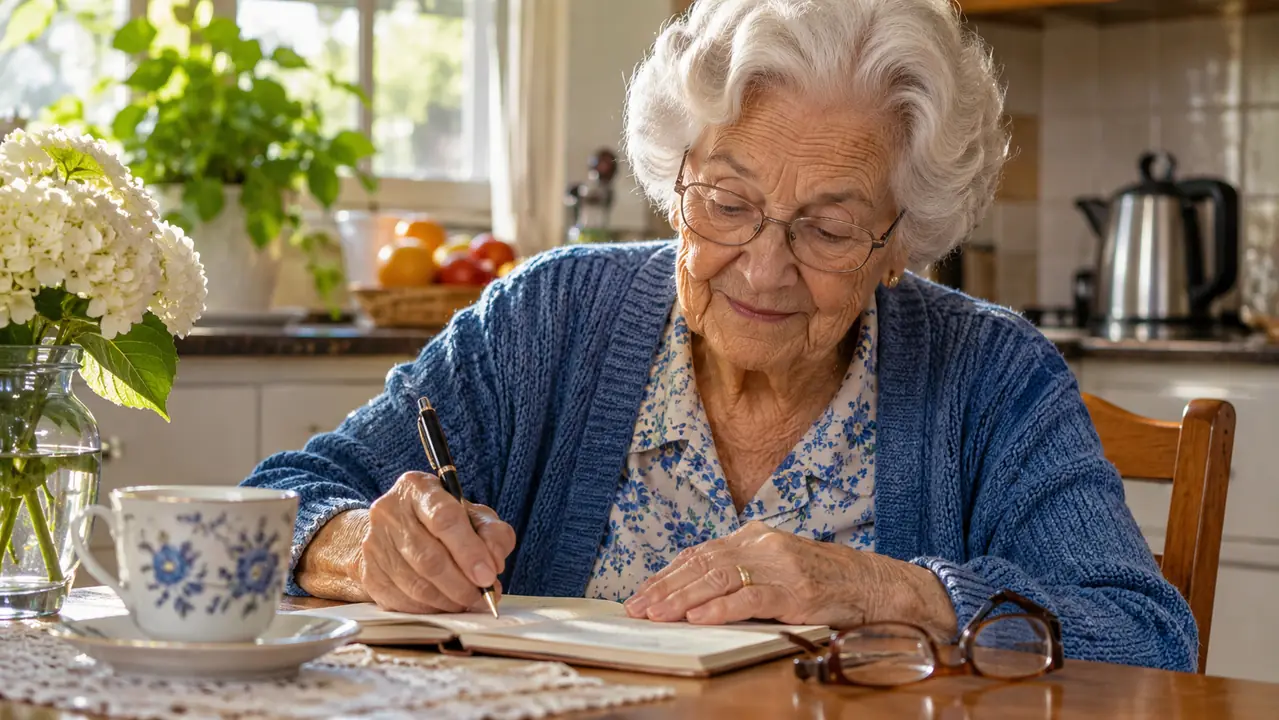
Six months ago I handed my mother a book and braced for the polite nod. She is 88, she lives in an assisted living apartment twenty minutes from my house in Lancaster, and she has spent a lifetime deflecting questions about herself. Ask June what she wants for her birthday and you get 'nothing, I have everything.' Ask her about the summer she worked at a resort in the Poconos and you get twenty minutes you did not plan on. The book was Tell Me Your Life Story, Grandma, and my worry was simple: would she actually write in it, or would it join the sweater steamer in the back of her closet?
She wrote in it. Not every day, and not in the order the pages come, but she wrote. That is the short version of this review. The longer version involves 122 pages, a light book that sits on a lap, the way her hands behave at nine at night, and what happens when a guided journal meets a woman who insists she has nothing interesting to say. If you are shopping for a grandmother and trying to work out whether this is the gift that gets used or the gift that gets thanked and shelved, that is what I want to cover.
The Quick Verdict
A guided journal that gets a reluctant storyteller talking on paper, as long as she is willing to write by hand in short sittings. The 122 pages are a real commitment, not a weekend project.
Amazon Check Today's Price →122 pages of her voice, in her own handwriting
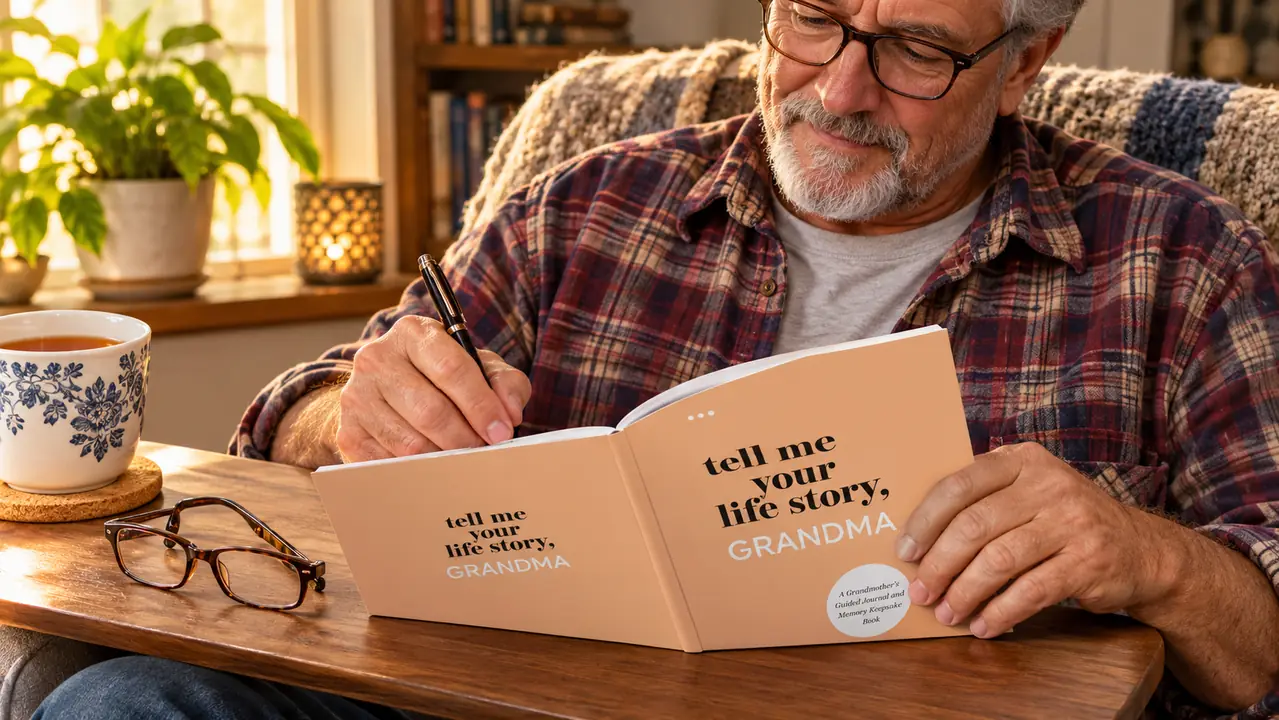
Tell Me Your Life Story, Grandma is a guided journal built around the questions nobody thinks to ask until it is too late to ask them. At 9.1 ounces it sits on a lap while she works, and it does not need a charger.
Amazon Check Today's Price on Amazon →How I've Used It
I gave it to her in March. Not a birthday, not a holiday, just a Tuesday, because I did not want the gift to show up carrying a deadline. She opened it, flipped through, said 'well, that is a lot of questions,' and set it on the side table. That was the last I heard about it for eleven days.
Then she called about something else entirely and mentioned, near the end, that she had done four pages. She read me the one about her first job. I pulled the car over. Not because it was profound, though parts of it were, but because I had never heard any of it before and I have known this woman my whole life.
Since then it has been slow and steady. She works on it in the evenings after her programs end. Some weeks it is three pages, some weeks it is none at all. Nothing in the book demands a schedule, which matters more than I expected. A book that nags gets abandoned. This one waits.
There is a practical thing worth saying too. At 7 by 10 inches the book fits in a tote bag and it fits on the shelf next to her photo albums. It has traveled to two doctor appointments and one visit to my house, and it has come back both times with new pages in it.
For what it is worth, I have bought her three guided journals over the years. Two are still blank. The difference here is not that this one is prettier to look at. It is that the questions are specific enough to answer without having to decide where to start, and a blank page never gives you that.
What 122 Pages Actually Asks of Someone
Here is the number I keep coming back to. 122 pages. Written by hand, at the pace of a pen, by a woman with firm opinions about her own penmanship. For a person who already journals, that is a pleasant month. For a person who has never kept a diary in her life, it is a hill.
My mother is the second kind. The first thing she said after four pages was not that it was lovely. It was 'this is going to take me a while.' She was right. It will take her a while. That is not a flaw in the book so much as a fact about any book that asks you to write it.
The pages themselves are comfortable to write on. At 7 by 10 inches the book is bigger than a pocket notebook and smaller than a letter pad, so there is room for a real answer without so much space that she feels obliged to fill it. She has skipped pages that did not apply and doubled back to ones she passed over. The pages she expected to dislike turned out to be the ones she read to me.
What I would say to anyone buying this: do not hand it over with an expectation attached. No 'I would like it back by Christmas.' The value is in her working at her own pace and in her own order, and the moment it becomes an assignment with a due date, you have lost her.
The Prompts Do the Work She Won't Do for Herself
The reason this works where a blank notebook fails is that a blank notebook asks her to decide what matters. My mother will not do that. Hand her an empty page and she will write a grocery list on it and consider the matter closed.
A guided page gives her a starting line. 'What was your mother like?' is a question she can answer. 'Write your life story' is an assignment she can dodge until Thursday and then forever. Tell Me Your Life Story, Grandma stays on the answerable side of that line. The questions are narrow enough to prompt a memory and open enough that she is not just filling in blanks.
There is a side effect I did not expect. Because so many of the questions are about ordinary things, the house she grew up in, the first job, how she met my father, she has been dredging up material she has not thought about in decades. Two of those memories have already corrected stories I have been retelling wrong for thirty years.
The one she has repeated to her friends is about the kitchen she grew up in. She has now described it twice, once in words on the page and once on the back of an envelope for the four year old, who wanted to know where the stove was. A question she would never have thought to ask herself produced a drawing my granddaughter will keep.
She read me the page about her first job and I pulled the car over. I have known this woman my whole life and I had never heard any of it.
The Hands Question
My mother has mild arthritis in her hands, so I watched for this more closely than anything else. A gift that hurts to use is not a gift. It is an obligation with a spine.
The book itself is light at 9.1 ounces and thin at a little under a third of an inch, so it sits on a lap or a lap desk without needing to be propped open. That detail matters more than it sounds. A heavy book that keeps closing on your hand is the reason a lot of journals go unfinished.
Even so, she writes in short sittings. Twenty minutes and she is done for the night. The book does not mind. It is paper and it will be there tomorrow, which is more than I can say for the tablet my brother bought her two Christmases ago.
What It Has Done for Our Family
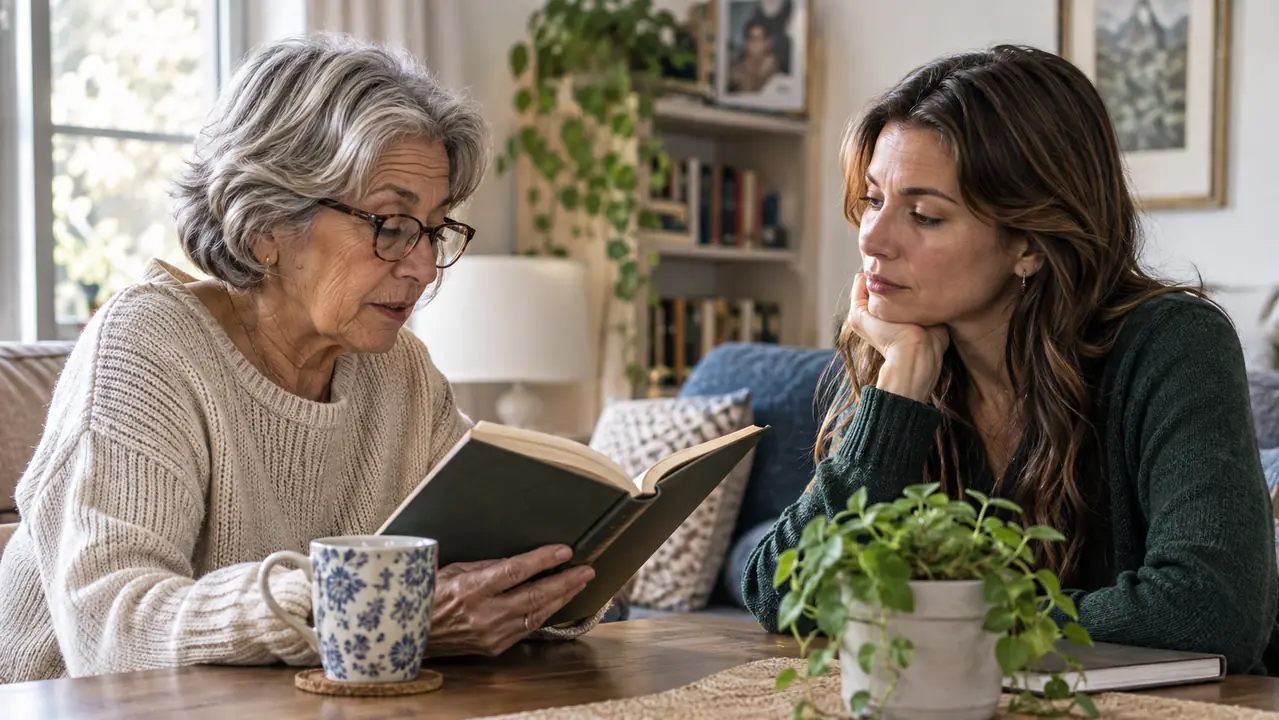
I did not expect the reading out loud. That has become the part I would pay for twice. She calls, she reads a page, I ask follow-up questions, and the call runs long. My husband Ron has started hovering near the phone when he hears me say 'wait, say that again.'
Ron is not a reader and he has never once asked to see the book himself. He did ask me, quietly, whether she had written about her father. She has. He read that page standing up in the kitchen and did not say anything for a while.
The grandkids are four to fourteen, and the older two have started asking her questions directly, which they never did before. The fourteen year old wanted to know what school was like for her. That conversation does not happen on its own. Something has to open the door, and it turns out a book on the side table does it.
My brother, who is not a reader and not sentimental, has asked twice now whether she is still working on it. That says something. When the least sentimental person in the family starts tracking a book, the book is doing work nobody planned for.
I will not oversell this. Some pages are dull. Some are three sentences and a trailing off. She is 88 and writing by hand at nine at night, and not every entry is going to be a gift to posterity. But the ones that land, land hard, and there are more of them than I expected when I handed it over in March.
The First Two Weeks Are the Whole Test
With a journal like this, the first two weeks decide everything. If she is going to stall, she stalls early, and then the book becomes furniture. What saved it here was that I never asked about it. Not once in those eleven days. The moment it became something I wanted from her, it would have become homework, and my mother has never once finished homework she did not choose.
If you want something practical, give it on an ordinary day, mention one question you are curious about, and then leave it alone. That is roughly what happened here by accident, and it worked. The reading out loud came from her, not from me, and I think that is the only reason it came at all.
What I Would Do Differently
I would have written a note on the inside cover. Not a long one, just who I am and why I want this. She is not sentimental about objects, but she is sentimental about being asked, and a line in my handwriting would have told her this came from a person and not from a catalog.
I also would have bought it earlier. She is 88. We have had a good six months of pages, but there is no version of this where I look back and decide I got started in plenty of time. If you are on the fence about timing, the answer is the ordinary Tuesday, not the birthday in October.
Where It Could Be Better
Two things. The first is that nothing in the book suggests how long the whole thing is meant to take, and that vagueness is exactly what makes a hesitant writer set it on a shelf. Even a loose suggestion would help someone get moving. She got there on her own, but it took eleven days and a phone call.
The second is that the questions are general by design, and general questions do not fit every life. My mother was a farm girl and then worked in a school office for thirty years, and a few pages read as though they were written for a different woman. She skipped them without guilt, which I now think is the correct way to use a book like this, but a buyer should expect some waste.
Neither of those is a reason to skip it. They are the reasons I am not giving it a perfect score.
What I Liked
- Questions specific enough to get a reluctant writer started without a blank page standoff
- Light at 9.1 ounces and thin at 0.28 inches, so it sits on a lap without being propped open
- 122 pages means months of use rather than a single sitting
- The prompts cover ordinary life, the kitchen, the first job, the walk to school, which is where the good stories are buried
- Runs on a pen. No app, no charger, no subscription, nothing for anybody to troubleshoot
Where It Falls Short
- 122 handwritten pages is a long haul for someone who has never kept a diary
- Writing by hand is slow going with arthritic hands, so expect short sittings
- Nobody can fill it in for her. If she will not write, it stays blank
- It asks for words first. If the person you are buying for would rather look at photographs than write about them, this is the wrong shape of gift
Who This Is For
Buy it for the grandmother who talks but never writes anything down, and for the family that keeps meaning to record her and keeps not doing it. Buy it for the woman who has a story she tells at every holiday dinner, because now it is on paper and the next generation gets to keep it after the dinner is over. Buy it for someone who does not want an app, a charger, or a subscription, and who will be quietly relieved that the whole thing runs on a pen. Tell Me Your Life Story, Grandma is 122 pages of specific questions, and specific questions are what get past a lifetime of deflection.
It also suits the person who says she has nothing interesting to say. That is the person this book was built for. A narrow question gets under the deflection in a way that 'tell me about your life' never will, and it does it without anyone in the room having to push.
Who Should Skip It
Skip it if the person you are buying for cannot or will not write by hand. Skip it if her hands are worse than mild arthritis, because a 122 page writing project stops being a kindness at that point. Get her a recorded interview instead, or sit down with a voice memo and ask the questions yourself while she talks.
Skip it if you are buying it as a substitute for actually asking. The book is a prompt, not a relationship. If nobody reads it back to her and nobody follows up, half the value never shows up. And skip it if you want something she can finish in an afternoon, because she will not, and neither would you.
The questions you keep meaning to ask her
122 pages, 9.1 ounces, and no deadline except the one nobody wants to think about. Hand it over on an ordinary Tuesday and let her work at her own pace.
Amazon Check Today's Price on Amazon →